About KAMAWANU

History and Philosophy of KAMAWANU
Keeping the Tradition of Tenugui Alive
In the 1980s, as Japan's economy grew, traditional items such as tenugui were becoming less common in everyday life. We wanted to preserve the history, cultural significance, and traditional techniques behind these textiles and pass them on to future generations.
In 1987, we opened our first store in Daikanyama, Tokyo. At the time, tenugui were mainly associated with kimono, but we wanted to introduce them to a wider audience. By highlighting the meaning behind their patterns and the many ways they can be used, we began exploring new ways to make tenugui part of everyday life.

Our Philosophy
We are dedicated to preserving the traditional craft of tenugui and sharing the many ways it can be part of everyday life.
Through the production and sale of tenugui, as well as ideas for using them, we aim to pass on traditional dyeing techniques while introducing the versatility of these textiles and the meanings behind their patterns.
The Beauty of Tenugui
Versatile, adaptable, and made to be part of everyday life
Tenugui are traditional Japanese cotton cloths known for their versatility. They can be used in many ways, from everyday household tasks to gift wrapping and home decoration.
Their patterns often carry special meanings, reflecting the seasons, good fortune, and wishes for happiness. At KAMAWANU, we create new designs every year, combining traditional motifs with ideas inspired by contemporary life.
We believe tenugui should be more than something to look at. They are made to be used, enjoyed, and incorporated into everyday life.

Respect for Craftsmanship
We listen to our customers and only create our products on a realistic basis, limiting unnecessary production, and thus, waste.
Regardless of the size of the business or market, we take it upon ourselves to produce carefully hand-crafted items as the need arises and convey their true value.
Our Logo

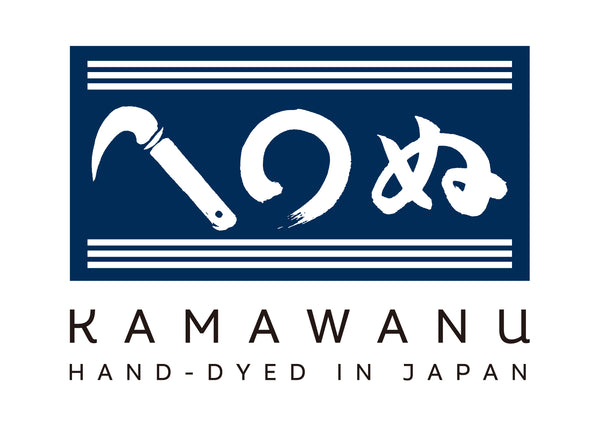
KamaかまJapanese tool used for cutting |

WaわJapanese word for circle or ring |

NuぬJapanese character from the hiragana syllabary |
The KAMAWANU logo combines these three elements: KAMA (sickle), WA (circle), and NU (a hiragana character).
The name is inspired by the spirit of the Edo-period firefighters, who were known for their courage and willingness to put everything on the line to protect their communities.
In the Edo period (1603–1868), many people lived in long, connected wooden houses called nagaya. When a fire broke out, firefighters sometimes deliberately pulled down buildings to create a break and prevent the flames from spreading.
These firefighters were often ordinary townspeople who risked their lives to protect their neighborhoods. Their uniforms featured the KAMAWANU pattern, a symbol associated with their fearless spirit.
This spirit continues to inspire us today. We strive to make products available to anyone who wants them, regardless of the size of the market, and to respond to the needs of our customers.
Environmental Responsibility
We work with our manufacturing partners to ensure that wastewater from production is properly treated in accordance with Japanese laws and local regulations.
Before being discharged into the local sewage system, wastewater undergoes physical and chemical treatment, including sedimentation and pH adjustment.